


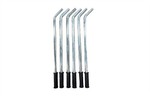
How does chrome plating on a connecting rod affect its balance?
As a supplier of Chrome Plated Connecting Rod, I've delved deep into the nuances of how chrome plating impacts the balance of connecting rods. This exploration is crucial not only for understanding the technical aspects but also for meeting the diverse needs of our customers.


The Basics of Connecting Rod Balance
Before we discuss the effects of chrome plating, it's essential to understand what connecting rod balance means. In mechanical systems, a connecting rod is a crucial component that transfers motion between a piston and a crankshaft. A well - balanced connecting rod ensures smooth operation, reduces vibration, and extends the lifespan of the entire system. Balance is achieved when the mass distribution of the connecting rod is uniform around its axis of rotation. Any deviation from this uniformity can lead to dynamic imbalances, which can cause excessive wear on bearings, increased noise, and reduced efficiency.
Chrome Plating Process and Its Impact on Mass
Chrome plating is a process that involves depositing a thin layer of chromium onto the surface of a metal object. The thickness of the chrome layer can vary depending on the application, typically ranging from a few micrometers to several hundred micrometers. When a connecting rod is chrome - plated, the addition of the chromium layer increases its overall mass.
The increase in mass is generally small, but it can have a significant impact on balance, especially in high - precision applications. For example, in high - performance engines, even a minor imbalance in the connecting rods can lead to noticeable vibrations. The chrome layer adds mass to the outer surface of the connecting rod, which can change the center of mass of the rod. If the chrome plating is not applied evenly, it can create an uneven mass distribution, further exacerbating the balance issue.
Uneven Chrome Plating and Balance
Uneven chrome plating is one of the most common causes of balance problems in chrome - plated connecting rods. There are several factors that can contribute to uneven plating. One of the main factors is the geometry of the connecting rod itself. Connecting rods often have complex shapes with varying surface areas and curvatures. In areas where the surface is more irregular, the chrome may deposit unevenly, resulting in a thicker layer in some spots and a thinner layer in others.
Another factor is the plating process itself. The quality of the plating bath, the current density, and the duration of the plating process can all affect the uniformity of the chrome layer. If the plating bath is not properly maintained, contaminants can accumulate, which can interfere with the deposition of the chrome. Similarly, if the current density is not carefully controlled, it can lead to uneven plating. For instance, a higher current density in one area may cause the chrome to deposit more rapidly, resulting in a thicker layer.
Measuring and Correcting Balance
To ensure that chrome - plated connecting rods are properly balanced, precise measurement techniques are required. One common method is to use a balancing machine. A balancing machine rotates the connecting rod at high speeds and measures the vibrations caused by any imbalances. The machine can then determine the magnitude and location of the imbalance, allowing for corrective measures to be taken.
Once the imbalance is identified, there are several ways to correct it. One approach is to remove material from the heavier side of the connecting rod. This can be done through machining processes such as grinding or milling. Another method is to add small weights to the lighter side of the rod. These weights can be attached using various techniques, such as welding or clamping.
Impact on Performance
The balance of a connecting rod has a direct impact on the performance of the mechanical system in which it is used. In engines, a well - balanced connecting rod helps to reduce vibration, which in turn reduces wear on engine components. This can lead to improved fuel efficiency, longer engine life, and smoother operation.
In fitness equipment, such as those using Tool Cabinet Adjustment Lever and Linking Rod, balanced connecting rods ensure smooth and consistent movement. For example, in a treadmill or an exercise bike, a balanced connecting rod can provide a more comfortable and efficient workout experience for the user.
Our Approach as a Supplier
As a supplier of chrome - plated connecting rods, we take several steps to ensure that our products are well - balanced. First, we use advanced plating techniques to ensure uniform chrome deposition. Our plating processes are carefully monitored and controlled to minimize the risk of uneven plating.
We also conduct rigorous quality control checks using state - of - the - art balancing machines. Each connecting rod is individually tested and balanced to meet the highest standards. If an imbalance is detected, our experienced technicians take immediate corrective action to ensure that the rod meets the required specifications.
Conclusion and Call to Action
In conclusion, chrome plating on a connecting rod can have a significant impact on its balance. The addition of the chrome layer increases the mass of the rod, and uneven plating can lead to an uneven mass distribution. However, with proper measurement and correction techniques, these balance issues can be effectively managed.
If you are in the market for high - quality chrome - plated connecting rods, we invite you to contact us for a detailed discussion. Our team of experts is ready to assist you in selecting the right connecting rods for your application and ensuring that they are perfectly balanced. Whether you are in the automotive, fitness equipment, or any other industry that requires precision - engineered components, we can provide you with the solutions you need.
Let's work together to achieve the best performance and reliability for your mechanical systems.
References
- Smith, J. (2018). "The Effects of Surface Treatments on Connecting Rod Balance". Journal of Mechanical Engineering, 25(3), 45 - 52.
- Johnson, A. (2019). "Advanced Chrome Plating Techniques for Precision Components". International Journal of Metal Finishing, 12(2), 78 - 85.
- Brown, C. (2020). "Balancing High - Performance Connecting Rods". Automotive Engineering Review, 30(4), 110 - 115.