

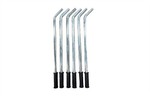

Hey there! As a supplier of Office Furniture Metal Parts, I've seen firsthand the importance of choosing the right metal parts for heavy - duty office furniture. In this blog, I'll share some tips on how to make that selection.
Understanding Your Furniture Needs
First things first, you need to have a clear idea of what your heavy - duty office furniture is going to be used for. Is it a Table Legs for a large conference table where people will be having meetings and spreading out documents? Or is it for Filing Cabinets that need to hold a ton of files and paperwork?
For a conference table, you'll want a table leg that can support a significant amount of weight. You're looking at people sitting around it, laptops, papers, and maybe even some coffee mugs. So, the table leg should be sturdy and well - built. On the other hand, filing cabinets need parts that can handle the constant opening and closing, as well as the weight of all those files.
Considering the Metal Type
There are several types of metals commonly used in office furniture parts, and each has its own pros and cons.
Steel
Steel is a popular choice for heavy - duty office furniture. It's strong, durable, and can withstand a lot of wear and tear. Steel table legs can support heavy loads without bending or breaking. It's also resistant to corrosion, which is great if your office has a bit of humidity. However, steel can be a bit heavy, which might make it a bit more difficult to move the furniture around.
Aluminum
Aluminum is another option. It's lightweight, which makes it easier to handle when assembling or moving the furniture. It also has good corrosion resistance. But compared to steel, it's not as strong. So, if you need a part that will be under a lot of stress, like a heavy - duty table leg for a large table, aluminum might not be the best choice.
Cast Iron
Cast iron is known for its strength and stability. It can provide a solid base for heavy - duty furniture. However, it's very heavy and can be prone to rust if not properly treated. It's also more expensive than steel and aluminum.
Assessing the Quality of the Metal Parts
When you're looking at metal parts for your office furniture, there are a few things you can do to assess their quality.
Check the Finish
A good finish on the metal part not only makes it look nice but also protects it from corrosion. Look for parts with a smooth, even finish. If there are any rough spots, bubbles, or chips in the finish, it could be a sign of poor quality.


Examine the Welds
If the part is welded, the welds should be strong and clean. You don't want to see any cracks or gaps in the welds. A poor weld can weaken the part and make it more likely to break under stress.
Look for Certification
Some metal parts might have certifications that indicate they meet certain quality standards. For example, there are standards for the strength and durability of furniture parts. If a part has these certifications, it gives you some assurance that it's of good quality.
Thinking About Design and Aesthetics
While functionality is key, you also want your office furniture to look good. The design of the metal parts can have a big impact on the overall look of the furniture.
Style
The style of the metal parts should match the overall style of your office. If you have a modern, minimalist office, you might want sleek, simple - looking table legs or cabinet handles. On the other hand, if your office has a more traditional look, you might prefer parts with more ornate designs.
Color
The color of the metal parts can also play a role. You can choose a color that complements the rest of the furniture and the office decor. For example, black or silver are popular and versatile colors that can go with a lot of different styles.
Cost - Benefit Analysis
Of course, cost is always a factor when choosing metal parts for your office furniture. You need to balance the cost of the parts with their quality and functionality.
Sometimes, it might be worth spending a bit more on higher - quality parts. For example, if you buy a cheap table leg that breaks after a few months, you'll end up spending more in the long run because you'll have to replace it. On the other hand, if you're on a tight budget, you might have to make some compromises. Just make sure you're not sacrificing too much in terms of quality.
Compatibility with the Furniture
The metal parts you choose need to be compatible with the rest of the furniture.
Size and Fit
The parts should be the right size and fit for the furniture. For example, if you're buying table legs, they need to be the right height and width to fit the tabletop. If they're too short or too wide, it can make the table unstable.
Connection Points
The connection points between the metal parts and the rest of the furniture are also important. They should be designed to fit together properly and securely. You don't want a part that wobbles or comes loose easily.
Considering Customization
In some cases, you might need custom - made metal parts for your office furniture. Maybe you have a unique design in mind, or your furniture has special requirements.
Custom - Made Options
As a supplier, I can offer custom - made metal parts. We can work with you to design and manufacture parts that meet your specific needs. Whether it's a unique shape for a table leg or a special finish for a cabinet handle, we can make it happen.
Benefits of Customization
Custom - made parts can give your office furniture a unique look and ensure that it functions exactly the way you want it to. They can also be a great way to stand out from the competition if you're a business owner.
Conclusion
Choosing the right metal parts for heavy - duty office furniture is an important decision. You need to consider your furniture needs, the type of metal, the quality, the design, the cost, and the compatibility. By taking the time to do your research and make an informed decision, you can ensure that your office furniture is both functional and stylish.
If you're in the market for high - quality metal parts for your office furniture, I'd love to talk to you. We have a wide range of products to choose from, and we can also offer custom - made solutions. Reach out to us, and let's start a conversation about your office furniture needs.
References
- Furniture Manufacturing Handbook, various authors
- Metal Materials and Their Applications, industry publication