


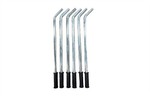
As a trusted supplier of Office Furniture Metal Parts, ensuring the quality of our products is of utmost importance. High - quality metal parts not only enhance the durability and functionality of office furniture but also contribute to the overall aesthetic appeal. In this blog, I'll share some effective ways to test the quality of metal parts in office furniture.


Visual Inspection
The first step in testing metal parts is a thorough visual inspection. This is a simple yet crucial method that can reveal a lot about the quality of the parts.
- Surface Finish: Check for any signs of scratches, dents, or rust on the surface of the metal parts. A smooth and even surface finish indicates a high - quality manufacturing process. For example, in Filing Cabinets, the metal drawers should have a uniform paint or coating without any visible blemishes. Any rough spots or uneven coloring could be a sign of poor workmanship or low - grade materials.
- Shape and Dimensions: Measure the metal parts to ensure they conform to the specified dimensions. Deviations from the standard size can lead to fitting problems when assembling the office furniture. For instance, if the Table Legs are not of the correct length or width, the table may be unstable. Use precision measuring tools such as calipers and micrometers to get accurate measurements.
Material Analysis
Knowing the type and quality of the metal used in the parts is essential for assessing their overall quality.
- Chemical Composition: Conduct a chemical analysis to determine the exact composition of the metal. Different metals have different properties, and the right composition is crucial for the intended use of the office furniture. For example, steel parts may need to have a specific carbon content to ensure strength and durability. Techniques like spectroscopy can be used to analyze the chemical elements present in the metal.
- Hardness Testing: Measure the hardness of the metal parts. Hardness is an important property as it affects the wear resistance and strength of the parts. There are several methods for hardness testing, such as the Brinell, Rockwell, and Vickers tests. For example, in high - traffic areas, metal parts like chair frames need to be hard enough to withstand repeated use without deforming.
Mechanical Testing
Mechanical testing helps evaluate how the metal parts will perform under different loads and conditions.
- Tensile Testing: This test measures the maximum amount of tensile (pulling) stress a metal part can withstand before breaking. In office furniture, parts like cables and fasteners need to have sufficient tensile strength. For example, the metal wires used in wire mesh chairs should be able to support the weight of the user without snapping. A tensile testing machine is used to apply a gradually increasing load until the part fails.
- Compression Testing: Compression testing is used to determine how well a metal part can withstand compressive (pushing) forces. For instance, the legs of a heavy - duty filing cabinet need to be able to support the weight of the files without collapsing. A compression testing machine applies a load perpendicular to the surface of the part to measure its compressive strength.
- Bending Testing: Bending testing assesses the flexibility and ductility of the metal parts. Office furniture parts like desk edges and chair arms may need to be able to bend slightly without breaking. A bending test is performed by applying a force to the part to bend it to a certain angle and observing how it responds.
Corrosion Resistance Testing
Since office furniture is often exposed to various environmental conditions, corrosion resistance is a vital quality factor.
- Salt Spray Test: The salt spray test is a common method for evaluating the corrosion resistance of metal parts. The parts are placed in a chamber and exposed to a salt - water mist for a specified period. After the test, the parts are inspected for signs of corrosion. This test can simulate the effects of long - term exposure to a humid or coastal environment. For example, metal outdoor office furniture needs to have high corrosion resistance to withstand the elements.
- Humidity Testing: Similar to the salt spray test, humidity testing exposes the metal parts to a high - humidity environment. This helps determine how well the parts will resist corrosion in normal indoor conditions. Place the parts in a humidity - controlled chamber for a set time and then check for any signs of rust or degradation.
Assembly and Functionality Testing
Finally, it's important to test the metal parts in the context of the assembled office furniture.
- Assembly Ease: Check if the metal parts fit together easily during the assembly process. If the parts are difficult to assemble, it could indicate problems with their dimensions or manufacturing tolerances. For example, if the holes in a metal frame do not align properly with the bolts, it may be a sign of poor quality.
- Functionality: Test the functionality of the office furniture with the metal parts installed. For example, open and close the drawers of a filing cabinet multiple times to ensure smooth operation. Check the stability of a table by applying pressure from different angles. Any issues with functionality could be a result of poor - quality metal parts.
In conclusion, testing the quality of metal parts in office furniture is a comprehensive process that involves multiple steps. By conducting visual inspections, material analysis, mechanical testing, corrosion resistance testing, and assembly and functionality testing, we can ensure that the metal parts we supply meet the highest standards of quality.
If you are in the market for high - quality Office Furniture Metal Parts, we are here to serve you. Our team of experts is dedicated to providing the best products and services. We welcome you to contact us for procurement discussions. Whether you need Filing Cabinets or Table Legs, we have the right solutions for your office furniture needs.
References
- ASM Handbook Committee. (2000). ASM Handbook Volume 8: Mechanical Testing and Evaluation. ASM International.
- ASTM International. (2019). Standard Test Methods for Tension Testing of Metallic Materials. ASTM E8/E8M - 19a.
- ISO. (2017). ISO 9227:2017 Corrosion tests in artificial atmospheres — Salt spray tests. International Organization for Standardization.