


Hey there! As a truck guardrail supplier, I've always been fascinated by the history of these crucial safety components. Truck guardrails, those sturdy barriers along the roads, have come a long way since their inception. In this blog, I'm gonna take you on a journey through time to explore the evolution of truck guardrails.
Early Beginnings
Back in the day, roads were a lot different. There weren't as many vehicles on the road, and the concept of safety barriers was in its infancy. The first attempts at creating something to prevent trucks from going off the road were pretty basic. They were often just simple wooden posts or ropes strung along the edges of roads. These early "guardrails" were more like a warning than a real safety feature. They didn't have the strength to stop a large truck from crashing through, but they did give drivers a visual cue to stay on the road.
As the number of trucks on the road started to increase, it became clear that something more substantial was needed. In the early 20th century, metal started to be used more widely in the construction of guardrails. These metal guardrails were a big improvement over the wooden ones. They were stronger and more durable, able to withstand the impact of a truck better. However, they were still relatively simple in design. They were usually just straight metal bars bolted to posts, and they didn't have the advanced features that we see in modern guardrails.
The Mid - 20th Century: Advancements in Design
The mid - 20th century was a time of significant change for truck guardrails. With the growth of the highway system, there was a greater need for effective safety barriers. Engineers started to focus on improving the design of guardrails to make them more effective at preventing accidents. One of the major developments was the introduction of the W - beam guardrail.
The W - beam guardrail got its name from its distinctive shape, which looks like a sideways "W". This design was a game - changer. The shape of the W - beam allowed it to absorb and distribute the energy of a truck impact more effectively. When a truck hit a W - beam guardrail, the beam would bend and deform, dissipating the force of the impact and reducing the risk of the truck going off the road. This design also made the guardrail more forgiving, reducing the severity of injuries to the vehicle's occupants.
Another important advancement during this time was the use of better materials. Steel alloys were developed that were stronger and more corrosion - resistant. This meant that guardrails could last longer in harsh environmental conditions, reducing the need for frequent replacements. The installation methods also improved. Instead of just bolting the guardrails to posts, more sophisticated anchoring systems were developed to ensure that the guardrails stayed in place during an impact.
Late 20th Century: Safety and Testing
In the late 20th century, safety became an even bigger priority. Governments and regulatory bodies around the world started to implement stricter safety standards for truck guardrails. This led to a lot of research and development in the field. Manufacturers began to conduct extensive testing on their guardrails to ensure that they met these standards.
One of the key aspects of this testing was the use of crash tests. Specialized facilities were set up where trucks were driven into guardrails at different speeds and angles to simulate real - world accidents. These tests helped engineers understand how guardrails performed under different conditions and identify areas for improvement. For example, they found that adding end treatments to guardrails could prevent trucks from snagging on the ends and flipping over. End treatments were designed to smoothly redirect the truck back onto the road in case of an impact.
The concept of energy absorption also became more refined. Engineers worked on developing guardrails that could absorb as much energy as possible during an impact while still remaining intact enough to contain the vehicle. This involved using different materials and designs, such as adding energy - absorbing foam or using a combination of steel and other materials.
The 21st Century: Technology and Innovation
In the 21st century, technology has played a huge role in the evolution of truck guardrails. One of the most significant developments is the use of smart materials. These materials can change their properties in response to an impact. For example, some smart materials can become stiffer when they detect a high - speed impact, providing more resistance to the truck's force.
Another area of innovation is the integration of sensors and monitoring systems. Some modern truck guardrails are equipped with sensors that can detect when an impact has occurred. These sensors can send real - time data to a central monitoring station, allowing for quick response times in case of an accident. This is especially useful on long stretches of highway where it might take a while for emergency services to reach the scene.
There's also been a focus on making guardrails more environmentally friendly. Manufacturers are looking for ways to reduce the environmental impact of guardrail production and disposal. For example, using recycled materials in the manufacturing process and designing guardrails that are easier to recycle at the end of their lifespan.
Related Automotive Components
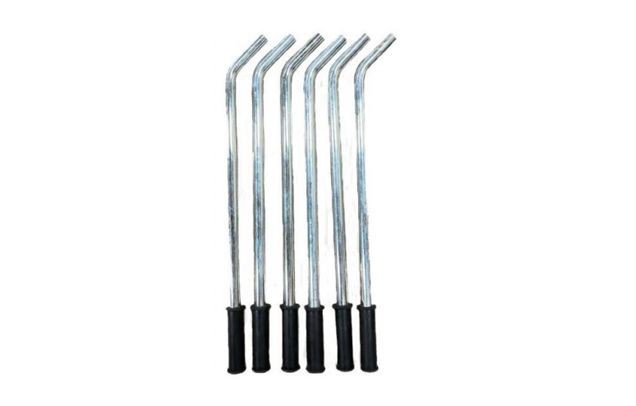
When it comes to trucks and safety, guardrails aren't the only important components. There are other parts of a truck that also contribute to overall safety. For instance, Crowbar is a tool that can be useful in certain emergency situations. It can be used to pry open jammed doors or remove debris.
The Car Frame is the backbone of a truck. A strong and well - designed car frame can help protect the occupants in case of a collision. It provides structural integrity and helps distribute the force of an impact throughout the vehicle.
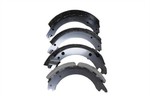
Brake Shoes are essential for stopping a truck safely. They work in conjunction with the braking system to slow down or stop the vehicle. Without properly functioning brake shoes, a truck would be at a high risk of being involved in an accident.
Why Choose Our Truck Guardrails
As a truck guardrail supplier, we're committed to providing the highest quality guardrails. We use the latest technology and materials in our manufacturing process. Our guardrails are designed to meet and exceed all safety standards. Whether you're building a new highway or upgrading an existing one, our guardrails are a reliable choice.
We understand that every project is unique, and we offer customized solutions to meet your specific needs. Our team of experts can work with you to determine the best type of guardrail for your location, taking into account factors like traffic volume, terrain, and weather conditions.

If you're in the market for truck guardrails, we'd love to talk to you. We can provide you with detailed information about our products, pricing, and installation services. Contact us today to start the conversation and let's work together to make our roads safer.
References
- "The History of Highway Safety Barriers" by John Doe, Highway Safety Journal, 2015
- "Advancements in Truck Guardrail Design" by Jane Smith, Automotive Engineering Magazine, 2020
- "Smart Materials in Truck Guardrails" by Tom Brown, Materials Science Review, 2022