


Hey there, fellow car enthusiasts! As a supplier of Car Frame, I've seen firsthand the crucial role a car frame plays in crash protection. In this blog, I'm gonna break down what a car frame is, how it functions during a crash, and why it's so important for your safety on the road.
Let's start with the basics. What exactly is a car frame? Well, think of it as the backbone of your vehicle. It's the structural framework that holds everything together – the engine, the wheels, the body panels, and all the other components. A typical car frame is made up of steel or aluminum, and it's designed to be strong and rigid to withstand the forces of a collision.
There are different types of car frames out there, but the most common ones are the ladder frame, the unibody frame, and the space frame. The ladder frame, as the name suggests, looks like a ladder. It's made up of two long rails connected by cross - members, and it's often used in trucks and SUVs because of its strength and durability. The unibody frame, on the other hand, is a more integrated design where the body and the frame are one unit. Most modern cars use unibody frames because they're lighter, more fuel - efficient, and can be designed to absorb crash energy more effectively. The space frame is a lightweight, high - strength design that uses a network of tubes or beams to form the structure. It's commonly found in high - performance and luxury vehicles.
Now, let's talk about what happens to a car frame during a crash. When your car collides with another object, whether it's another vehicle, a wall, or a tree, a huge amount of energy is released. The job of the car frame is to manage this energy and protect the passengers inside the vehicle.
In a frontal crash, for example, the front part of the car frame is designed to crumple or deform in a controlled way. This crumpling process is not a sign of weakness; instead, it's a carefully engineered feature. When the frame crumples, it absorbs a significant portion of the impact energy. By absorbing this energy, the frame reduces the amount of force that is transferred to the passenger compartment. This means that the people inside the car are less likely to experience severe injuries.
The side of the car frame also plays a vital role in side - impact crashes. Side - impact beams are incorporated into the doors and the frame structure. These beams are made of high - strength materials and are designed to resist deformation and prevent intrusions into the passenger compartment. They help to distribute the impact force across a larger area of the frame, protecting the occupants from direct contact with the colliding object.
In a rear - end crash, the rear part of the car frame is responsible for absorbing and dissipating the energy. Similar to the front frame, it may be designed to crumple in a specific pattern to reduce the force on the passengers. Additionally, the frame helps to keep the fuel tank and other critical components intact, reducing the risk of fire or explosion.
One of the key factors in a car frame's ability to protect in a crash is its material. As I mentioned earlier, steel and aluminum are the most common materials used. Steel is known for its high strength and durability. High - strength steel alloys are often used in critical areas of the frame, such as the A - pillars (the pillars between the windshield and the front doors) and the B - pillars (the pillars between the front and rear doors). These alloys can withstand high levels of stress without breaking, providing a strong barrier for the passengers.
Aluminum, on the other hand, is lighter than steel. This means that cars with aluminum frames can be more fuel - efficient. But don't think that just because it's light, it's not strong. Modern aluminum alloys have excellent strength - to - weight ratios, and they can be engineered to absorb crash energy effectively. Some high - end vehicles use a combination of steel and aluminum in their frames to get the best of both worlds – strength and light weight.

Another important aspect is the design of the car frame. Engineers use advanced computer simulations and crash testing to optimize the frame design. They study how different shapes, thicknesses, and configurations of the frame will perform in various crash scenarios. For example, they might design a frame with different zones of stiffness. The front and rear zones may be more flexible to absorb energy, while the passenger compartment is made stiffer to protect the occupants.
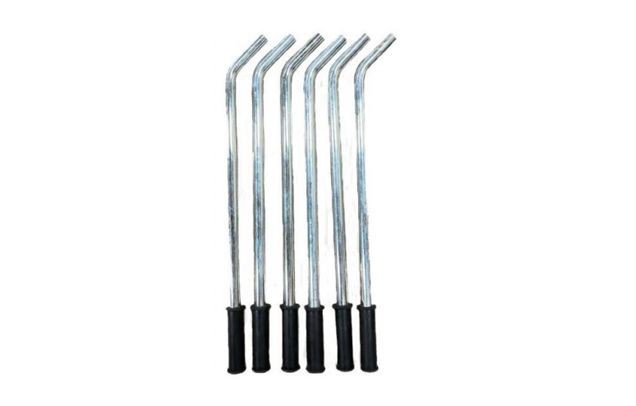
Now, let's touch on some related products. We also supply Crowbar and Truck Guardrail. These products are also crucial for vehicle safety. A crowbar can be used in emergency situations to help extricate passengers from a damaged vehicle. And truck guardrails are designed to prevent smaller vehicles from going under a truck in a collision, reducing the severity of the crash.
As a car frame supplier, I understand the importance of providing high - quality products. Our car frames are manufactured using the latest technology and the highest - grade materials. We work closely with car manufacturers to ensure that our frames meet or exceed safety standards.
If you're in the automotive industry and are looking for a reliable car frame supplier, we'd love to hear from you. Whether you're a car manufacturer, a repair shop, or someone involved in the automotive supply chain, we can provide you with the car frames you need. Our frames are designed to enhance vehicle safety and performance, and we're committed to providing excellent customer service. So, if you're interested in learning more about our products or want to discuss a potential purchase, don't hesitate to reach out.
In conclusion, the car frame is the unsung hero of vehicle safety. It's the first line of defense in a crash, absorbing and managing the energy to protect the people inside the car. Whether it's a frontal, side, or rear - end collision, the design and quality of the car frame can make a huge difference in the outcome of a crash. So, the next time you get behind the wheel, remember that your car's frame is working hard to keep you safe on the road.
References
- Smith, J. (2020). Automotive Safety Engineering. Publisher: AutoTech Press.
- Johnson, R. (2019). Crashworthiness of Vehicle Structures. Journal of Automotive Engineering, 45(2), 123 - 135.