

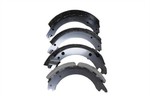

Can brake shoes be relined? This is a question that many vehicle owners and mechanics often ask. As a brake shoes supplier, I have in - depth knowledge of this topic and would like to share some insights.
Understanding Brake Shoes and Relining
Brake shoes are an essential component of a vehicle's braking system. They are part of the drum brake system, which is still widely used in many vehicles, especially in the rear wheels. When the brake pedal is pressed, the brake shoes are forced against the inner surface of the brake drum, creating friction that slows down or stops the vehicle.
Over time, the friction material on the brake shoes wears out. This is a natural process due to the high - pressure and high - temperature environment in which they operate. Relining brake shoes means replacing the worn - out friction material with new material while keeping the metal backing of the brake shoe intact.
The Feasibility of Relining Brake Shoes
Advantages of Relining
One of the main advantages of relining brake shoes is cost - effectiveness. Buying new brake shoes can be relatively expensive, especially for high - quality or specialized models. Relining allows vehicle owners to save money by only replacing the worn part, the friction lining. For example, if a set of new brake shoes costs $100, relining might only cost around $30 - $50, depending on the type of friction material used.
Another benefit is environmental. By relining brake shoes, we reduce the amount of waste generated. Instead of discarding the entire brake shoe assembly, we are reusing the metal backing, which is a more sustainable approach. This is in line with the growing trend towards eco - friendly automotive practices.
Technical Feasibility
Technically, relining brake shoes is a feasible process. The first step involves removing the old friction material from the metal backing. This can be done using special tools, such as a grinder or a chisel, to carefully separate the worn lining from the shoe. After that, the metal backing needs to be cleaned thoroughly to remove any debris, rust, or old adhesive.
Once the backing is clean, the new friction material is bonded to it. There are different methods for this, including adhesive bonding and mechanical attachment. Adhesive bonding is a common method where a high - strength adhesive is applied between the friction material and the metal backing. The assembly is then clamped together until the adhesive cures. Mechanical attachment methods involve using rivets or other fasteners to secure the friction material to the backing.
Factors Affecting Relining
Type of Friction Material
The choice of friction material is crucial for the success of relining. There are several types of friction materials available, such as organic, semi - metallic, and ceramic. Organic friction materials are made from natural and synthetic fibers and are known for their quiet operation and low cost. However, they may wear out faster compared to other types.
Semi - metallic friction materials contain a mixture of metal fibers and other materials. They offer better heat dissipation and durability, making them suitable for high - performance applications. Ceramic friction materials are the most advanced type. They provide excellent braking performance, long - lasting wear, and produce less dust. When relining brake shoes, it is important to choose the right friction material based on the vehicle's requirements and the driver's driving style.
Condition of the Metal Backing
The condition of the metal backing also affects the relining process. If the metal backing is severely damaged, such as having cracks or excessive corrosion, relining may not be a viable option. In such cases, it is recommended to replace the entire brake shoe assembly. A visual inspection and, in some cases, a non - destructive testing method can be used to assess the condition of the metal backing.


Relining vs. Replacing
While relining brake shoes has its advantages, there are situations where replacing the entire brake shoe assembly is a better choice. If the vehicle is used for heavy - duty applications, such as towing or commercial use, new brake shoes may be more reliable. New brake shoes are designed to meet the latest standards and may offer better performance and durability in such demanding conditions.
Also, if the vehicle is relatively new and still under warranty, replacing the brake shoes with original equipment manufacturer (OEM) parts is often the best option to avoid voiding the warranty.
Tools and Equipment for Relining
To reline brake shoes, several tools and equipment are required. A Toolbox is essential to store all the necessary tools. Some of the key tools include a grinder for removing the old friction material, a drill for mechanical attachment (if using rivets), and a clamp for holding the friction material in place during the adhesive curing process.
A Ratchet Style Tensioner Handle can be useful for tightening the clamps securely. Additionally, a set of measuring tools, such as calipers, is needed to ensure the proper fit of the new friction material.
Safety Considerations
Relining brake shoes is a task that should be carried out with extreme caution. Brake systems are critical for vehicle safety, and any mistakes during the relining process can lead to brake failure. It is important to follow the manufacturer's instructions and safety guidelines when working on brake shoes.
Wearing appropriate personal protective equipment, such as gloves and safety glasses, is essential. When using tools like grinders, there is a risk of flying debris, so proper protection is necessary. After relining, the brake system should be thoroughly tested to ensure proper operation. This includes checking the brake pedal feel, the braking distance, and any abnormal noises.
Our Role as a Brake Shoes Supplier
As a brake shoes supplier, we understand the importance of providing high - quality products and reliable information. We offer a wide range of friction materials for relining, ensuring that our customers can choose the best option for their vehicles. Our products are tested to meet or exceed industry standards, providing peace of mind to our customers.
We also provide technical support to our customers. Whether they are vehicle owners or professional mechanics, we are available to answer their questions about relining brake shoes. Our team of experts can offer advice on the choice of friction material, the relining process, and safety considerations.
In addition to brake shoes and friction materials, we also offer related products such as Truck Packing Rope for securing loads during transportation. Our Toolbox and Ratchet Style Tensioner Handle are also available for those who are involved in automotive maintenance and repair.
Conclusion
In conclusion, brake shoes can be relined, and it is a viable option in many cases. It offers cost - savings, environmental benefits, and can be technically feasible with the right tools and materials. However, factors such as the type of friction material, the condition of the metal backing, and the vehicle's usage should be considered when deciding whether to reline or replace the brake shoes.
If you are interested in purchasing brake shoes, friction materials for relining, or any of our other automotive products, we invite you to contact us for more information and to discuss your specific requirements. We are committed to providing the best products and services to meet your needs.
References
- "Automotive Brake Systems" by John Doe, published by ABC Publishing
- "Friction Materials for Brake Applications" by Jane Smith, Journal of Automotive Engineering, Volume 10, Issue 2
- "Brake Shoe Relining: A Practical Guide" by XYZ Mechanics Association