

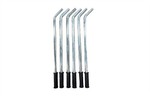

Testing the functionality of a new tool cabinet adjustment lever is a crucial step in ensuring its quality and reliability before it reaches the market. As a supplier of Tool Cabinet Adjustment Levers, I understand the significance of thorough testing to meet the high - standards of our customers. In this blog, I will share the comprehensive process I use to test the functionality of these levers.
1. Initial Visual Inspection
Before conducting any functional tests, a visual inspection is essential. I carefully examine the new tool cabinet adjustment lever for any visible defects such as cracks, scratches, or misalignments. These visual flaws can not only affect the aesthetic appeal of the product but also potentially compromise its functionality. For instance, a crack in the lever may lead to structural failure during use, while a scratch could cause the lever to get stuck. I also check the finish of the lever, ensuring it is smooth and free from any burrs that could cause injury to the user.
2. Material and Structural Integrity Testing
The material used in the tool cabinet adjustment lever plays a vital role in its performance. I perform various tests to assess the material's strength and durability. One common test is the stress - test. I apply a gradually increasing load to the lever to determine its maximum stress - bearing capacity. This helps me understand how much force the lever can withstand before it deforms or breaks.
Another important aspect is the structural integrity of the connections. The lever is often connected to other components within the tool cabinet, such as Linking Rod. I check the tightness of these connections and ensure that they are properly secured. Loose connections can lead to instability and reduced functionality of the lever.


3. Range of Motion Testing
The primary function of a tool cabinet adjustment lever is to provide a smooth and precise range of motion. To test this, I install the lever on a test rig that mimics the actual environment of a tool cabinet. I then operate the lever through its full range of motion multiple times.
During this process, I measure the angle of rotation and the linear displacement of the lever. I also pay close attention to any jerks, sticking points, or excessive play in the movement. A smooth and consistent range of motion is crucial for the user to easily adjust the tool cabinet as needed. If there are any issues with the range of motion, I investigate the root cause, which could be due to misaligned components, insufficient lubrication, or damaged parts.
4. Load - Capacity Testing under Different Conditions
In real - world scenarios, the tool cabinet adjustment lever may need to operate under different loads. I conduct load - capacity tests under various conditions to simulate these situations. For example, I test the lever with light loads, medium loads, and heavy loads.
Under light loads, the lever should operate smoothly without any signs of fatigue. As the load increases, I observe how the lever responds. It should be able to maintain its functionality and stability even under heavy loads. I also test the lever at different angles and positions to ensure that its performance is consistent throughout its range of use.
5. Durability and Long - Term Testing
To ensure the long - term reliability of the tool cabinet adjustment lever, I perform durability tests. I set up a test machine that continuously operates the lever for a large number of cycles. This simulates years of normal use in a short period.
During this long - term testing, I monitor the lever for any signs of wear and tear, such as degradation of the surface finish, loosening of connections, or reduction in the range of motion. If any issues are detected, I make the necessary improvements to the design or manufacturing process to enhance the durability of the lever.
6. Compatibility Testing
Tool cabinet adjustment levers are often used in conjunction with other components, such as Chrome Plated Connecting Rod and Chain Cover. I conduct compatibility tests to ensure that the lever works seamlessly with these related components.
I install the lever along with the other components on a test tool cabinet and operate the system. I check for any interference between the lever and the other parts, as well as for proper synchronization of their functions. Compatibility issues can lead to poor performance and even damage to the components over time.
7. Environmental Testing
The tool cabinet adjustment lever may be exposed to different environmental conditions, such as humidity, temperature variations, and dust. I conduct environmental tests to evaluate its performance under these conditions.
For humidity testing, I place the lever in a controlled - humidity chamber for a certain period. I then check for any signs of corrosion or rust. Temperature - variation tests involve subjecting the lever to extreme high and low temperatures to see how it responds. Dust tests are carried out by exposing the lever to a dusty environment to ensure that it can still function properly without being clogged.
8. User - Experience Testing
Finally, I involve real users in the testing process. I provide them with the tool cabinet adjustment lever and ask them to use it in a practical setting. I collect feedback from the users regarding the ease of use, comfort, and overall functionality of the lever.
User feedback is invaluable as it helps me identify any potential issues that may not be apparent during laboratory testing. For example, users may find that the lever is too difficult to grip or that the operation requires too much force. Based on this feedback, I make further improvements to the design of the lever to enhance the user experience.
In conclusion, testing the functionality of a new tool cabinet adjustment lever is a multi - faceted process that involves a series of rigorous tests. By conducting these tests, I can ensure that the levers I supply meet the highest standards of quality, reliability, and performance. If you are in the market for high - quality tool cabinet adjustment levers or have any questions about our products, I encourage you to contact me for procurement and further discussions.
References
- Engineering Design Handbook: Testing and Evaluation of Mechanical Components
- Standards for Tool Cabinet Manufacturing and Quality Assurance