


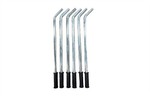
As a provider of Linking Rods, I've witnessed firsthand how the design of these components can significantly impact their functionality and application. In the realm of fitness equipment parts, the Linking Rod plays a crucial role, and understanding how its design influences its use is essential for both manufacturers and end - users.
1. Structural Design and Durability
The basic structure of a Linking Rod is a key factor in determining its durability. Linking Rods are often subjected to repetitive stress and varying loads during the operation of fitness equipment. A well - designed Linking Rod will have a balanced cross - sectional shape. For example, a circular cross - section provides uniform stress distribution around the rod. This design helps prevent stress concentrations that could lead to premature failure.
Furthermore, the length and diameter of the Linking Rod are carefully considered during the design process. A longer rod may offer greater range of motion but could also be more prone to bending under load. On the other hand, a thicker rod can withstand higher forces but may add unnecessary weight to the equipment. Manufacturers need to find the optimal combination of length and diameter based on the specific requirements of the fitness equipment.
Our company, as a Linking Rod supplier, invests a lot of resources in researching the best structural designs. We use advanced computer - aided design (CAD) software to simulate the stress and strain on different Linking Rod designs under various working conditions. This allows us to fine - tune the structural parameters to ensure maximum durability.
2. Material Selection and Design
The choice of material is closely related to the design of the Linking Rod. Different materials have different mechanical properties, and the design must be adapted accordingly. For instance, steel is a commonly used material for Linking Rods in fitness equipment due to its high strength and good fatigue resistance. However, the design of a steel Linking Rod may need to account for its relatively high density, which could affect the overall weight of the equipment.
Aluminum alloys are another option. They are lightweight, which can be beneficial for equipment where weight reduction is a priority. But aluminum has a lower modulus of elasticity compared to steel, so the design of an aluminum Linking Rod may need to be adjusted to compensate for its lower stiffness.
At our company, we offer Linking Rods made from a variety of materials. We work closely with our customers to understand their specific needs and recommend the most suitable material and design combination. Whether it's a high - strength steel Linking Rod for heavy - duty fitness machines or a lightweight aluminum Linking Rod for portable equipment, we have the expertise to provide the right solution.
3. Connection Design and Compatibility
The way a Linking Rod connects to other components in the fitness equipment is of utmost importance. The connection design determines how well the Linking Rod can transfer forces and how easily it can be installed and maintained.
There are several common connection methods for Linking Rods, such as threaded connections, pin connections, and welded connections. Threaded connections are easy to assemble and disassemble, which is convenient for maintenance. However, they need to be properly tightened to prevent loosening during operation. Pin connections provide a simple and reliable way to connect the Linking Rod to other parts, but they may require additional components to ensure proper alignment. Welded connections offer high strength and a permanent joint, but they are not easily reversible.


The design of the connection also needs to consider compatibility with other parts of the fitness equipment. For example, if the Linking Rod is used in a Chain Cover, the connection design must ensure that it fits well with the chain cover's structure and does not interfere with the movement of the chain.
Our company has a team of experienced engineers who specialize in connection design. We ensure that our Linking Rods are designed to be easily integrated with a wide range of fitness equipment components. We also provide detailed installation instructions to help our customers ensure proper assembly.
4. Surface Finish and Friction
The surface finish of a Linking Rod can have a significant impact on its performance. A smooth surface finish reduces friction, which is important for the smooth operation of the fitness equipment. Reduced friction also means less wear and tear on the Linking Rod and other connected components, extending their service life.
On the other hand, in some cases, a certain amount of surface roughness may be required. For example, if the Linking Rod is used in a mechanism where a small amount of friction is needed for grip or control, the surface finish can be designed to provide the appropriate level of friction.
We offer a variety of surface finishing options for our Linking Rods, including polishing, coating, and anodizing. Polishing provides a smooth surface, while coatings can enhance the corrosion resistance and reduce friction further. Anodizing is a popular option for aluminum Linking Rods, as it not only improves the surface hardness but also provides a decorative finish.
5. Design for Specific Applications
Linking Rods are used in a wide range of fitness equipment, from treadmills to Massage Chair Metal Accessories. Each application has its own unique requirements, and the design of the Linking Rod must be tailored accordingly.
In a treadmill, the Linking Rod may be used to connect the motor to the belt drive system. The design needs to ensure high - speed and smooth operation, as well as resistance to vibration. In a massage chair, the Linking Rod may be part of the mechanism that controls the movement of the massage rollers. Here, the design may focus on precise movement control and low noise operation.
Our company has a deep understanding of the specific requirements of different fitness equipment applications. We have developed a wide range of Linking Rod designs to meet these diverse needs. Whether you are a manufacturer of high - end fitness equipment or a small - scale producer of specialized massage chairs, we can provide you with a Linking Rod design that is optimized for your specific application.
Conclusion
In conclusion, the design of a Linking Rod has a profound influence on its use in fitness equipment. From structural design and material selection to connection design, surface finish, and application - specific considerations, every aspect of the design plays a crucial role in determining the performance, durability, and compatibility of the Linking Rod.
As a leading Linking Rod supplier, we are committed to providing our customers with high - quality Linking Rods that are designed to meet their specific needs. Our team of experts is always ready to work with you to develop the best Linking Rod solution for your fitness equipment. If you are interested in our products or have any questions about Linking Rod design and application, please feel free to contact us for further discussion and procurement negotiation.
References
- Shigley, J. E., & Mischke, C. R. (2001). Mechanical Engineering Design. McGraw - Hill.
- Budynas, R. G., & Nisbett, J. K. (2011). Shigley's Mechanical Engineering Design. McGraw - Hill.
- Callister, W. D., & Rethwisch, D. G. (2014). Materials Science and Engineering: An Introduction. Wiley.